Meet Harsh: The Engineer Who Builds Systems and Sketches Luffy at Cafés
|
Educational
Team Seezo
Behind every product decision, release, and late-night debug session is a person with a story. Meet the people building Seezo beyond their job titles.
It’s 2:30 AM in Bangalore. A customer update introduces a new edge case. While most people are asleep, he’s already awake, logged in, tracing the system.
Three parallel tracks: quick fix, root cause, long-term solution.
The first priority is clear: handle the edge case cleanly so everything continues smoothly. The deployment is done. Results look good. But he’s already digging deeper, understanding why this edge case surfaced, what assumption no longer holds, and how the system itself needs to evolve.
“Even after pushing the fix, you keep thinking, speculating edge cases, replaying the flow, analysing the system.”
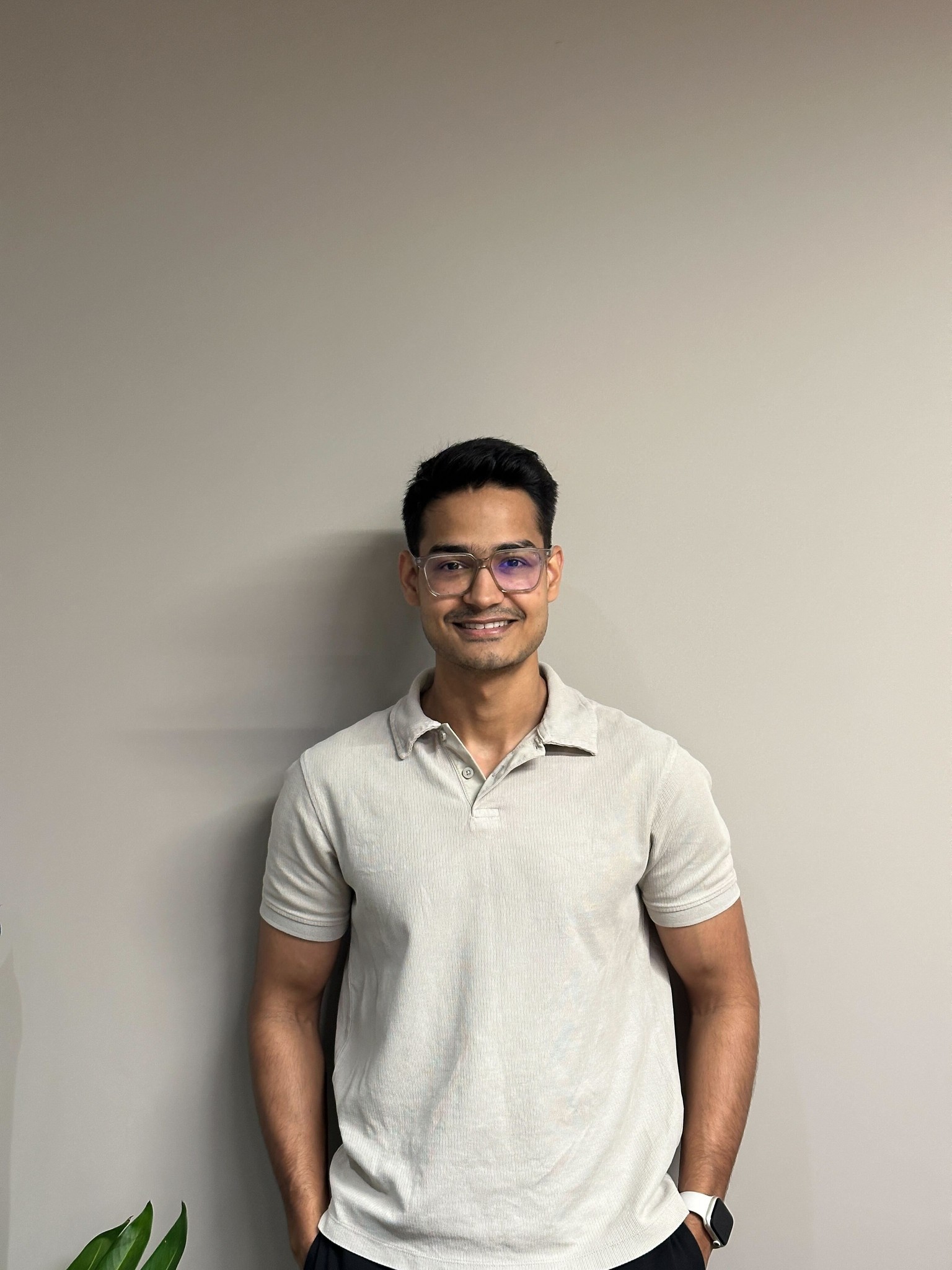
Meet Harsh Khandelwal, a backend engineer building the core engine that powers Seezo’s AI workflows and results.
Where it all started
Harsh started in ML during college, training and fine-tuning models before the field exploded commercially. He pivoted to full-stack engineering at Disney+ Hotstar, then to fintech at BharatX, eventually to Seezo, where his early ML instincts finally came full circle.
But before Disney, there was a Singapore company working on chip defect detection using images. Then a friend's crypto startup building smart contracts during the Bitcoin boom. This was still during his third year of college. Most students were worried about placements, but he was already neck-deep in production systems.
"Family responsibilities, I wanted to do something, not just sit around," he explains.
Building Seezo from the early days
Seezo happened at a time when a lot was changing.
BharatX had just shut down. Around the same time, GPT models were taking off and suddenly everyone was experimenting with OpenAI.
"I joined early, and I have been through the entire zero-to-one journey.”
Over time, the company evolved. More clarity. More people. More structured planning. Longer-term thinking.”
His role evolved too. Today, Harsh works as a Backend Engineer at Seezo, building the core systems that power the platform.
Most of his time goes into the processor: the main engine that powers Seezo. The system that executes workflows, makes LLM calls, gathers context, and generates results.
"And apart from that, a lot of services we have internally hosted, I manage those also, to improve engineers' productivity." He's not just building the product; he's building the tools that help the team build the product. It's meta-work, infrastructure for infrastructure.
But what really drives him isn't just the technical challenges, being part of something genuinely new. "Because Seezo is like a domain creator, it was very interesting to have that zero-to-one journey again, where we build the initial phases, see how people would respond."
Why context changes everything
Ask him what gets him excited at work, and the answer is immediate: context.
"Right now the AI space in general is moving so fast. People are handling memories, large documents, and context. They are intelligently retrieving relevant documents from the catalog instead of loading the entire thing. Now it’s less about building the models and more about applying them.
So that context, how we accumulate that context from the company or from the documents, from the code, that is very interesting. Better context = Better results. That’s what we are building at Seezo."
In any startup, there's always more to do than hours in the day. So how does he decide what gets his attention?
“Customer commitments always come first. But a lot of things are too exciting to put off. So we eventually do it anyway, even if it takes extra hours. There was this one instance when I was like, I have to do this optimization around 11, and that task got delayed because of some customer task. But then I had it in back of my head. I woke up at like 2:30 randomly and I fixed it.”
How he keeps up with AI
One of his biggest realizations at Seezo is that on-the-job experience isn't enough. Not in AI, where the field moves at breakneck speed.
“AI evolves so fast that if you’re not actively in it, you lose touch quickly. That’s why I keep exploring beyond work. Otherwise, your perspective becomes limited.”
Most people listen to Spotify on their commute. Well, Harsh chats with AI models.
“During my commute, I talk to Gemini or ChatGPT to brainstorm ideas, things like memory systems and caching engines for LLMs. It helps me think through problems and get clarity. It’s like having a personal podcast, but interactive.”
He is constantly working on prototypes and documenting insights. One turns YouTube videos and blogs into interactive audio podcasts, another helps him stay on top of the news, and a third guides gym-goers on when to increase weight, reps, or intensity.
Beyond the code
Ask about his routine outside work, and the gym comes up immediately. But not in the way you might expect.
"I take it more as a socializing challenge. I think it’s a great opportunity to talk to people.”
Between sets he is planning trips and having conversations. "By the way, that's why my gym sessions are usually longer. Because I'm talking to people, trying to interact."
In a city where groceries arrive at your doorstep in minutes, Harsh still goes to the vegetable market with his mother. “If you order 500 grams and half of it is wasted, it disrupts the entire plan.”
So now, they hand-pick everything. Fresh vegetables. Fresh dough every night. Quality in, quality out.
And then there was Pondicherry.
“We were in Pondicherry. We thought we should go to the beach and all. But then we ordered pencils and sheets, went to a cafe, started sketching, and I was completely locked in. I spent like one hour sketching. I didn't even know it's been one hour, but it was so satisfactory."
He used to sketch as a child. One of his pieces even got published in a paper. But like so many creative pursuits, it got shelved when life happened.
"Now I feel like I should do it more often.”


What gets him out of bed on Monday mornings?
“Every day, I’m excited about the problems we’re solving, memory, context, and how systems understand code and information.”
The difference between reading a blog post and talking to someone who's actually implementing the solution is night and day. “Blogs and videos give you theoretical context, but not real, hands-on feedback. Here, people are actively building and experimenting. I can just ask what problems you ran into, and how did you solve them?”
Ask about his role models, and his answer is refreshingly different.
“Not exactly in the online space. I look up to the people I work with. They’re incredibly creative, and their curiosity exposes me to ideas I wouldn’t have discovered on my own.”
He mentions Manthan specifically, his colleague at both BharatX and now Seezo.
“Every time I see him, he’s exploring something interesting. It pushes me to catch up. There’s so much happening in the community, but you can’t try everything. People around you help filter what’s worth exploring and what actually has real impact.
The road ahead
Ask about the next five years, and his goal is clear: Tech Lead.
“A Tech Lead understands both the technical systems and the business goals. They bridge the gap between implementation and impact.”
It’s about speaking both languages: technology and business clarity.
For now, though, he’s exactly where he wants to be.
Close to the problems. Close to the systems. And sometimes, waking up at 2:30 AM when something interesting refuses to let go.